Palm trees for graceful foliage and a distinctive outline
Palms bring a recognisable character to a garden or a bright sheltered space. Fan-shaped leaves create a different rhythm from arching feather-like fronds, and a clustered plant gives a different impression from a single clear trunk. Planteeva's Palm Trees collection lets you compare these forms alongside their growing requirements. Choose with the plant's identity, mature size and intended position in mind so the display can develop comfortably over time.The word palm does not describe one universal care routine. A smaller understory palm and a tall landscape species have different relationships with light, temperature and available space. Some plants sold under palm-like common names are not true palms at all. Use the product's botanical reference and current nursery information to understand what you are selecting before deciding that an attractive leaf shape will suit a particular room or garden.
Understand the form you want
Arching palms for a softer effect
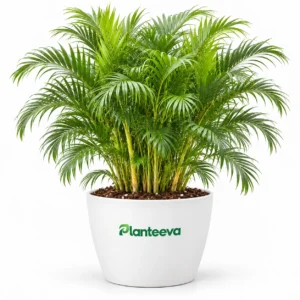
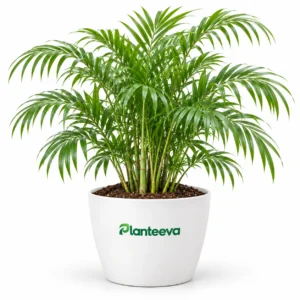
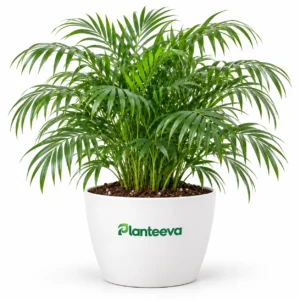
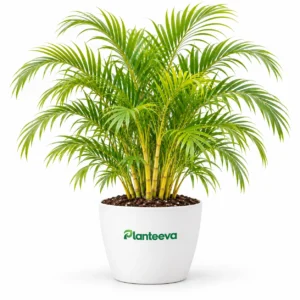
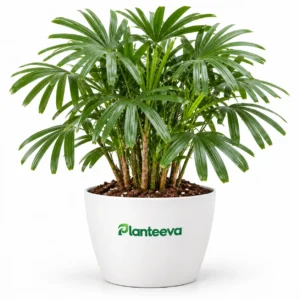
Areca Palm can create a full, layered appearance where the plant has suitable growing conditions. Think about width as well as height, because arching fronds need room around the container. A palm pressed tightly against a wall is harder to inspect and may lose the natural outline you chose it for. Leave enough access to water, clean up dead material and check the hidden side of the plant.Bamboo Palm offers another choice for a bright sheltered arrangement, while Lady Palm has a different leaf texture and structure. Compare the actual supplied form rather than assuming similar nursery heights will create the same effect. These plants can complement a seating area or entrance when their light and root needs are met, but their placement should remain practical as new growth expands the display.
Fan leaves for a clear architectural statement
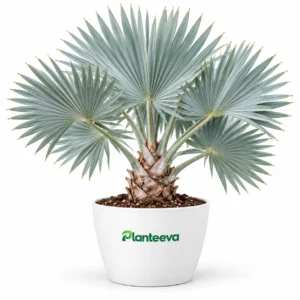
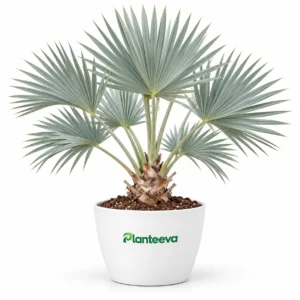
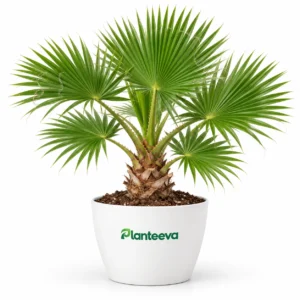
Bismarckia Palm Tree can become a substantial feature, so choose it for a space that respects the eventual crown rather than only the size of the young plant. A large fan-shaped leaf can be visually striking, but it also needs physical clearance. Consider adjoining paths and surrounding planting before committing to a permanent position. Give the silhouette room to be seen instead of crowding it among other strong forms.American Palm (Washingtonia robusta) Fan Palm Tree has its own mature proportions and landscape role. Confirm the identified species and think about future height, maintenance access and the surrounding site. A nursery container does not define the eventual scale of a palm tree. Choose a smaller-growing or more manageable option if your available space cannot accommodate a large permanent specimen.
Feather-shaped crowns and trunk character
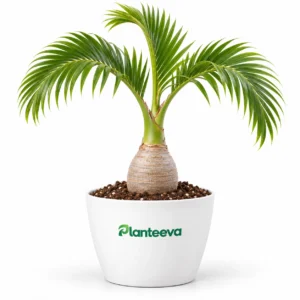
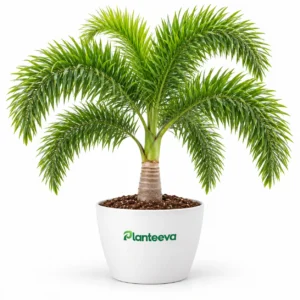
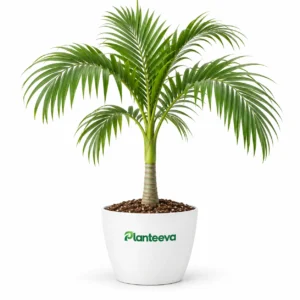
Foxtail Palm Tree and Alexandra Palm Tree offer feather-leaved outlines with different details of crown and trunk development. Compare their individual climate requirements and the selected plant's current size before planning a repeated planting. Uniform spacing can create a strong composition, but the spacing should respond to the mature plant and the actual use of the landscape rather than simply matching the distance between nursery pots.Bottle Palm Hyophorbe lagenicaulis Tree is chosen partly for its distinctive trunk character. A young specimen may not display the full appearance associated with an established plant. Let maturity be part of your expectation and focus on suitable conditions instead of trying to accelerate the effect with excessive feeding. Confirm cold tolerance and exposure requirements before choosing a long-term position.
Match the palm to the place
For a sheltered indoor position, assess the available daylight at the level of the foliage. A large palm cannot compensate for a dim room through size alone. Keep leaves away from hot glass, persistent cold draughts and strong air-conditioning flow. If the palm has been growing under different conditions, introduce a change of exposure gradually and watch the development of new growth.For an outdoor planting, observe sun, wind and drainage at the proposed site. A tall plant can receive stronger wind than you notice around its container. Coastal conditions, inland summer heat and cooler winter locations create different demands, so compare the identified species with the actual setting. A palm that performs well in one garden is not automatically the right choice for every city in Pakistan.
Give planting depth and roots proper attention
Keep the relationship between the trunk base and root zone appropriate when moving or planting a palm. Burying the base deeply is not a reliable way to make a plant more stable. Prepare the site so the root ball can sit at a suitable level, and address drainage before planting into a place that holds water. Use suitable handling assistance for heavy specimens and avoid lifting by the crown or leaves.In a container, choose a stable pot with drainage that remains accessible. The growing medium should suit the palm and the way the position behaves, rather than being chosen only for weight or appearance. Inspect the lower root-zone conditions as well as the surface. A large deep pot can remain wet below while looking dry above, especially when the plant is in a sheltered position.
Water and feed with the palm's condition in mind
Water needs vary between species and change with root development, weather and growing position. A newly planted palm may still depend heavily on the original root ball while it establishes. Check that area carefully rather than assuming nearby damp soil has supplied enough moisture. For potted specimens, allow surplus irrigation water to escape and empty trapped runoff from decorative covers.Palms can develop nutritional problems, but not every yellow or damaged leaf is proof that more fertiliser is needed. Review drainage, roots, planting depth and exposure as well. Where feeding is appropriate, use a suitable labelled product and follow its directions. A landscape recommendation should not be transferred automatically to a small indoor pot, and increasing the dose does not guarantee a quicker recovery.
Keep pruning restrained and purposeful
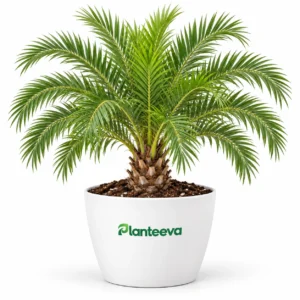
Green palm fronds contribute to the plant and should not be removed simply to create an artificially narrow crown. Remove genuinely dead material where it is safe and appropriate, and avoid injuring the trunk or central growing area. If work is above comfortable reach or involves heavy fronds, use qualified help suited to the task rather than improvising around a tall tree.Sago Palm Plants (Kangi Palm) needs a separate note because sago is a cycad. It may sit in a palm collection for its appearance, but its growth, handling and household suitability should be considered through that identity. All parts are toxic if eaten, with seeds particularly hazardous. Position it where people and pets will not chew plant material, and do not assume care or pruning advice for true palms applies unchanged.
Palm tree questions
Which palm is best for indoors?
Choose a species suited to sheltered growing and match it to the actual daylight, space and temperature in the room. Consider crown width and future growth as well as current height. An attractive landscape palm is not necessarily a suitable long-term indoor choice.
Can I cut the top to stop a palm getting taller?
Do not treat a true palm like a branching shrub. Damaging the growing point can be fatal to a single-stemmed palm. Select a species whose mature size fits your plan rather than relying on cutting off the crown to control height.
Should I remove every brown-tipped frond?
Assess how much of the frond is still living and investigate the cause of the damage. Repeated removal does not fix unsuitable watering, roots or exposure. Keep healthy foliage where possible and judge improvement by the condition of new growth.
Choose palms for the setting they will grow into
Browse Planteeva's Palm Trees collection to compare leaf shape, trunk character and eventual scale. Confirm the identity, prepare a suitable position and leave room for natural development. A palm chosen for the right place offers a more convincing and manageable feature than one selected only for its appearance at nursery size.