Large plants give a garden, entrance or open room a sense of structure. Their height can connect a planting scheme to the scale of a building, while a wide crown can make a bare corner feel more considered. Planteeva's Big Plants collection brings together strong silhouettes, especially palms and palm-like specimens, for people planning a substantial feature. Choose with the whole growing position in mind: the available floor area is only one part of the decision.Think about where the plant will be viewed, how people will move around it and what it may become as it matures. A young palm in a container can look manageable even when its eventual crown needs significant space. A full plant may also feel much wider at eye level than it does around the pot. Measure access routes, overhead clearance and the final position before selecting the current size that suits your project.
Start with the purpose of the planting
A softer screen beside a seating area
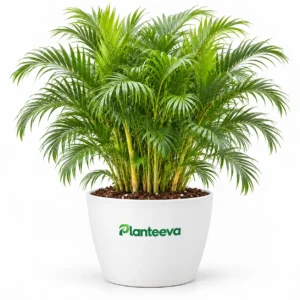
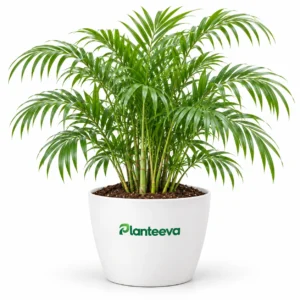
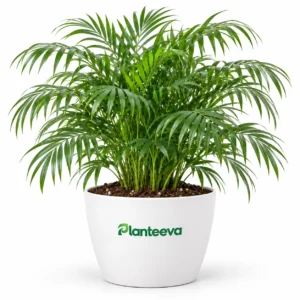
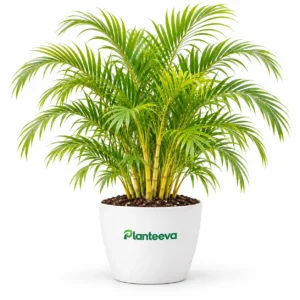
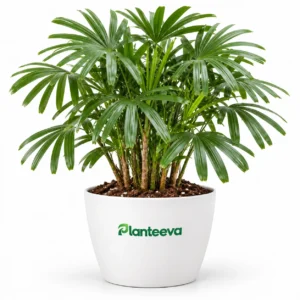
Areca Palm creates a different impression from a single, strongly defined trunk. Its arching growth can soften a bright sheltered setting, provided the plant has enough light and room for the foliage to spread. Leave access behind and around the container so you can inspect roots, clean up fallen material and water without bending fronds against furniture. A living screen needs a care route as well as a viewing side.Cat Palm offers another way to introduce dense, finely textured greenery. Compare its supplied form with the available space rather than choosing by height alone. Several arching stems can take up more room than a narrow upright specimen of similar height. If you are placing multiple plants along a boundary, leave breathing room between them instead of treating the nursery pot diameter as the final planting distance.
An architectural garden centrepiece
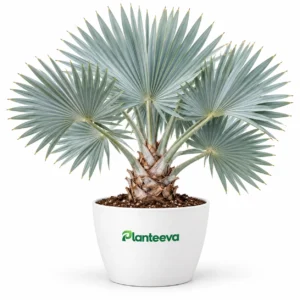
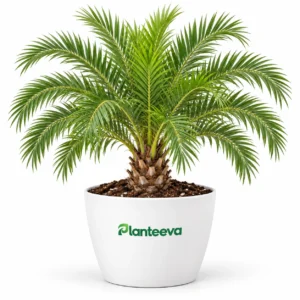
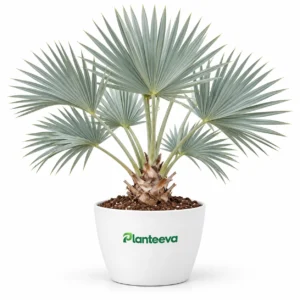
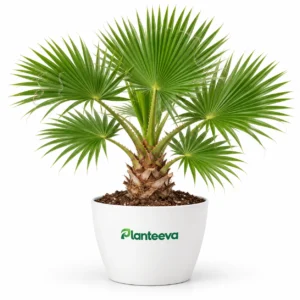
Bismarckia Palm Tree is a candidate for a setting where a broad fan-shaped crown can be given a clear role. Its appeal depends on space around the foliage as much as on its colour and symmetry. Consider the mature plant, surrounding pathways and nearby buildings before planning a permanent position. A container can provide an early display, but long-term planting needs to account for the identity and eventual scale of the palm.The feather-like crown of Canary Island Date Palm creates a different outline. Make allowance for stiff foliage, the working area needed for maintenance and separation from narrow pedestrian routes. Its name should not be treated as a guarantee of a useful edible-date crop. Choose it for the ornamental planting purpose described in the listing, and confirm the current size and nursery form before arranging a position.
A defined vertical feature
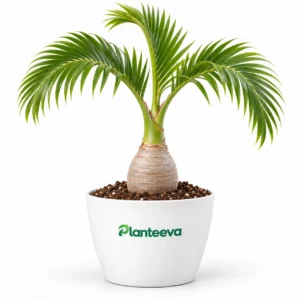
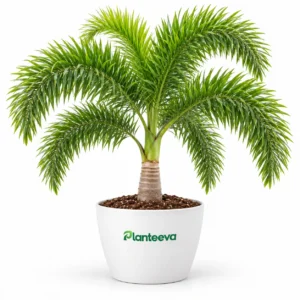
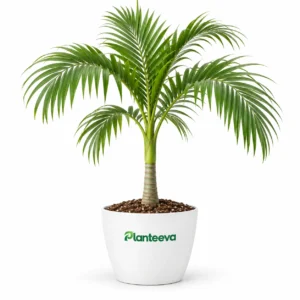
Compare Foxtail Palm Tree and Queen Palm Tree when you are considering a taller landscape accent. Look beyond the immediate height to the crown, trunk development and exposure at the proposed site. These are living trees whose appearance changes over time. Matching the palm to the local conditions and available space matters more than trying to reproduce the exact proportions of a nursery photograph.
Separate indoor display from outdoor planting
The phrase big plant describes size, rather than one shared set of growing conditions. A sheltered indoor palm and a sun-grown landscape palm cannot be placed interchangeably just because both look substantial. Check each product's light and temperature requirements. Indoors, a position needs enough daylight to support the whole plant; a large pot placed deep inside a room does not compensate for limited light reaching the leaves.Outside, assess direct sun, reflected heat, wind and drainage. A large specimen grown under nursery shade may need a gradual transition before it faces an exposed courtyard. Check conditions at leaf height as well as at the base of the pot. A protected corner can still collect hot air, while an open roof can expose a tall plant to much stronger wind than you notice at ground level.
Choose a practical container or planting position
A large container must suit both the root ball and the location. Check its drainage outlets, stability and overall weight once it contains growing medium and water. For an upper floor or rooftop, establish that the chosen position can accommodate the load before planning the display. Use suitable assistance for handling a heavy plant rather than trying to lift it by leaves, a crown or unsecured nursery stems.For a permanent landscape position, look at utilities, walls, gates and access for future care. Avoid solving a space problem by planting deeply. The relationship between the trunk base, root ball and soil surface is important, and a suitable planting position should let you preserve it. If the site holds water after irrigation or rain, address drainage before assuming a bigger planting hole will solve the problem.
Water a large root ball deliberately
Large containers can be deceptive. The surface may dry while the lower part remains moist, and water can run down a gap without wetting the centre evenly. Check more than one part of the root zone where practical and water steadily. Allow drainage to finish, then make sure runoff is not held inside an outer planter. The aim is even root-zone moisture appropriate to the plant, rather than a permanently wet container.After a move or planting, watch the plant and its growing medium closely while it establishes. A large crown does not mean roots are already exploring the surrounding soil. Heat, wind and a recent change of exposure can alter water use. Adjust your checks to those conditions and avoid interpreting every brown leaf tip as a request for extra feed or a larger daily volume of water.
Keep maintenance realistic
Large plants often benefit from restraint. Remove material that is genuinely dead or damaged and avoid cutting healthy palm fronds simply to make the crown look tidier. A living green frond is contributing to the plant. Keep ties, supports and nearby fixtures from rubbing on stems, and check that a plant remains stable as it grows or as weather changes.The Sago Palm Plants (Kangi Palm) listing is worth understanding separately: sago is a cycad, not a true palm. Its growth and handling should be based on that identity. In particular, keep it away from situations where children or pets may chew plant material. Attractive form and slow development can make it a considered feature, but the correct placement needs to take household use into account.
Big plant questions
Should I always buy the tallest option?
Choose the size that fits your space, access and ability to provide care. A slightly smaller, well-placed plant can develop more successfully than a larger specimen crowded into unsuitable light or an unstable container. Compare the selected option's actual dimensions and container information before deciding.
Can a large palm remain in a pot permanently?
Some palms can be managed in containers for a period, but the answer depends on species, root space and growing conditions. Do not assume every landscape palm will remain a suitable indoor or patio pot plant. Plan for future assessment, repotting or a permanent position where appropriate.
How do I avoid overcrowding a mature display?
Allow for the crown, access for maintenance and the natural outline of neighbouring plants. Use the mature habit as your planning guide, then check the current nursery size to understand the initial effect. Do not rely on repeated severe pruning to fit an unsuitable species into a narrow gap.
Build a feature that can develop
Explore Planteeva's Big Plants collection with a measured position and a clear purpose in mind. Compare crown shape, light requirements and future growth before selecting the current option. A substantial plant works best when it has the physical space and practical care it needs to remain a convincing part of your home or landscape over time.